
A running theme in Twain’s life is one of duality. In two previous posts I have examined ways in
which this duality plays out in his life.
The relationship between Tom and Huck is another example of the duality
in Mark Twain and the tension that is causes in his life. Twain patterned Tom Sawyer after himself as a
boy and while Huckleberry Finn was supposedly patterned after a boyhood friend
of Twain, Huck, especially in The
Adventures of Huckleberry Finn, has connections to Twain as an adult and alludes
to conflicts that Twain experienced in his later life.
Tom and Huck are complete opposites. Tom is a romantic; he is imaginative,
sociable, innovative, and adaptable. Tom
is a leader among his peers and understands his reality through a series of
highly fantastical situations and play.
He is constantly acting out various scenarios based on books he has read
and this type of play allows him to be someone that his normal life couldn’t
allow him to be. Huck on the other hand
is a realist; he doesn’t like people to tell him what to do, he is independent,
intelligent, but ignorant. Huck seems to
easily trust Tom and follows Tom’s lead in their interactions. These differences are qualities that Twain
seems to possess himself, a realist but interested in a fantasy world, resistant
to “silivization,” as Huck would put it, but readily moving throughout
society. He is very critical of the
world around him and questions the foundations of the society that he lives him,
much like Huck.
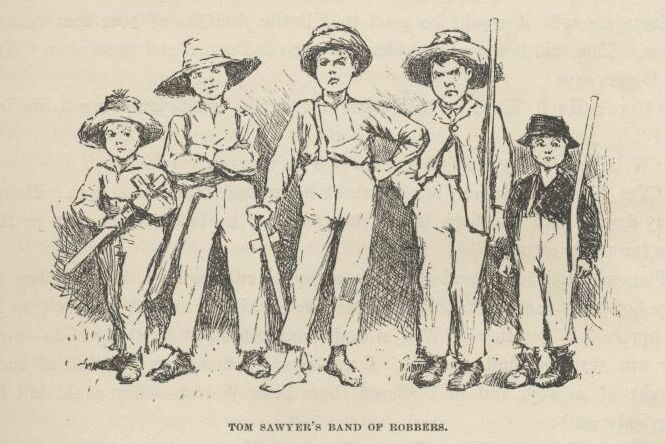 The tensions caused by the duality Twain experiences come
out in the exchange between Tom and Huck in chapter three of The Adventures of Huckleberry Finn. Tom has gathered the boys together and set up
a secret society of robbers based, of course, on a book that he has read. Tom sets the rules for these robbers and
makes sure the boys are adhering to these rules. After about a month of pretending to be
robbers many of the boys, including Huck, quit the gang. Huck seems disappointed that they “hadn’t
robbed nobody, [they] hadn’t killed any people, but only just pretended”
(18). Huck’s naïve and realistic
understanding of the world caused him to not be able to play along with the
game that Tom was creating. Instead he believes
that the world Tom is setting up is real; they will really rob and kill people. When Huck approaches Tom about his “lies,”
Tom insults Huck, not once but twice, calling him ignorant and a “perfect
slap-head” (20, 19).
The tensions caused by the duality Twain experiences come
out in the exchange between Tom and Huck in chapter three of The Adventures of Huckleberry Finn. Tom has gathered the boys together and set up
a secret society of robbers based, of course, on a book that he has read. Tom sets the rules for these robbers and
makes sure the boys are adhering to these rules. After about a month of pretending to be
robbers many of the boys, including Huck, quit the gang. Huck seems disappointed that they “hadn’t
robbed nobody, [they] hadn’t killed any people, but only just pretended”
(18). Huck’s naïve and realistic
understanding of the world caused him to not be able to play along with the
game that Tom was creating. Instead he believes
that the world Tom is setting up is real; they will really rob and kill people. When Huck approaches Tom about his “lies,”
Tom insults Huck, not once but twice, calling him ignorant and a “perfect
slap-head” (20, 19).
Twain is presenting a disturbing look at the duality he is exploring
through Tom and Huck. The two boys, the two sides, are at war with each
other. It seems destined that one should
over power the other, and perhaps the end Twain wrote for this book shows just
that. Huck seemingly goes back on his conscious and follows Tom in his plot to free Jim, a plot that further degrades Jim and seems to cancel out any change he made earlier in the book.

No comments:
Post a Comment